Sandwich
For reasons, you are spending a couple of workdays in Boise, Idaho. It’s lunchtime, and you’ve just bought a salami and cheese baguette from a decent-looking bakery on the corner. You find a spot at a bus shelter to sit, and take a bite. Ugh. It looked better behind the glass.
A lanky man in a casual suit and neatly combed hair is also sitting in the bus shelter. He turns to you. “Better avoid the cheese there, pal. The invisible velociraptors can smell that from a mile off.”
Once, a younger, more naïve version of you would have looked the stranger up and down and asked, “are you serious?” Since then you have learned from many bitter experiences, not the least of which was the first bite of this baguette. You merely grunt, and continue eating.

Serious
It’s a classic clickbait headline that never fails. “26% of Americans believe the sun revolves around the earth”, or whatever it may be. Mostly these are deliberate setups. Some of these are statistical artifacts: if few people hold that belief, the results are dominated by random answers. But when 34% of people say that the 2020 election was rigged against Trump, that’s a result to take seriously.
Do they really believe that?
It’s a truism by now that these answers are strongly affected by polarisation. Joe Diner doesn’t have a lot of evidence that the 2020 election was stolen, but he knows that Trump says that, and he backs Trump. So he ticks “strongly agree”. And the more he talks politics with his in-group, the more he adopts a shared set of beliefs. These beliefs will come to have a smaller and smaller connection to his lived experience. So it’s tempting to claim that he doesn’t really believe that Biden stole the election. He’s just saying it because he thinks it’s the right thing to say.
Allegedly, this is a left-wing phenomenon as well as a right-wing phenomenon. Today, most people on the left realise that the question “are trans women really women?” is loaded. For many of them, their response will be based more on solidarity with a sympathetic group than on any personal insight. You can’t bear first-hand witness to every important political question. It’s reasonable to take your cues from trusted peers.
But the reality is, we live in a moment in which outright denial of reality belongs to one side of politics. Like, c’mon. Do you think the invisible velociraptors guy votes Democrat?

Liberals
Suppose you are a young student wrestling with your conscience concerning how to spend your time this evening. You could stay up studying for the test tomorrow. You could get an early night. Or you could hang out with your friends. What to do?
If you were raised in the liberal tradition which, if you are reading this, is almost certainly how you were raised, the process goes something like this. You have a bunch of stylised facts you believe to be true. Such as, your test performance mostly depends on how tired you are. Or, tomorrow’s test is maths, and you’re good at maths. Or, tests don’t really matter, your social position is more important. Then you apply those beliefs to the alternatives, trying to predict the outcome of each. You select the alternative with the outcome you prefer. Tomorrow you may have cause to update your beliefs about the world, for example learning that you’re not as good at maths as you thought.
This is basically what liberals think thinking is. They think that’s what the word “think” means. Making decisions any other way isn’t thinking at all.
A key component of this process is the formation of beliefs. To a liberal, a belief is necessarily testable. A belief is necessarily falsifiable. And liberals feel obliged to change their beliefs as evidence arrives.
Again, that’s what liberals believe “belief” means. It’s hard for many liberals to hear the word “believe” and really believe it means anything else.

Authoritarians
But there’s another way to decide what to do this evening. You can choose an authority to follow. Then, instead of imagining how different scenarios would play out, imagine what that authority would instruct you to do. And do that.
This is far more efficient. It is also far more effective. Imitating other people’s actions is such a terrific idea in general, it’s evolved to be a core part of our neural architecture. So it’s certainly not as if liberals don’t use this same strategy. Considering “what would Lemmy do” is simply how healthy humans sometimes operate.
However, it does seem that a large number of people instinctively flip to this strategy all the time. For such people, the authorities they follow are far more important to their decision-making than the first-hand tested hypotheses they accumulate in their own lives. These are the people we can label “authoritarians“. For those people, “belief” means faith in the guidance of a real living person.
Really
So does your neighbour at the bus stop really believe that invisible velociraptors can smell cheese? It turns out, this depends on how you use those words. If you assume that a belief is a testable explanation that has so far proven to be a convincing predictor of real phenomena, then the answer is no. The guy has never detected a single invisible velociraptor, in the vicinity of cheese or otherwise. He has never observed any real person suffering a negative consequence from the presence of these invisible velociraptors, or of cheese. He is, in a nutshell, full of shit.
However, it is improbable that this invisible velociraptor business was his idea in the first place. More likely, he is part of a group with a shared world view. That world view includes faith in invisible velociraptors. When he expresses a belief in invisible velociraptors, he is expressing his loyalty and commitment to this group. Is that loyalty and commitment genuine? Almost certainly yes, and he is only proving that by intruding on your lunch today. So, sure. He’s totally a believer.
In my opinion, people with my background of liberal education are often led astray by the expression of the beliefs of authoritarians. We leap to the conclusion that what is needed here is contradictory evidence, and we are very well-positioned to provide that evidence. This is a huge tactical blunder.


Tribes
This is the point where I start to really go off-piste.
In particular, I note that this authoritarian tendency naturally produces “tribes”, as opposed to the reasoned debate that’s usually upheld as our intellectual ideal.
But that’s a problematic word to use. Many sustainable, stable societies shaped by the lessons of long histories were destroyed by the genocides of the colonial era, and are still being attacked today. The survivors draw strength from their identity as part of their tribe. The preservation of those societies and their traditions is imperative for those of us whose heritage is rooted in their destruction. If “tribal behaviour” is to be criticised, as it often is, that should be understood to mean something very different.
So instead I’ll conjure up a kind of historically illiterate hypothetical. Suppose you are living in your little house on the prairie, surviving by subsistence agriculture, without a single social institution to defend you. The mythical state of nature.
In this world there is nothing to stop your neighbour killing you and stealing your crops. In fact, that’s likely a very good idea. So you have to constantly look over your shoulder, sleep with one eye open, looking out for the attack. This is exhausting and wasteful.
There’s an alternative. Form a league with several other residents of the prairie. Agree that if any one of you is killed and robbed, the others will track down the murderer and torture them to death. The idea is to change your neighbour’s calculus, persuading them that attacking you is not worth the trouble. Since there is always a chance that your league may fail to find the murderer, or just give up, the punishment if they actually do catch a murderer has to be pretty extreme. Simple revenge killing isn’t enough. You need the torture too.
One problem with this scheme is that after you’ve been murdered, there isn’t a very strong incentive for your confederates to follow through on the threat. Especially if the murderer is a friend of one of them.
So this works best if there is some kind of natural cleavage between groups. This makes it clear which side everyone is on. The most straightforward way to do that is with blood relationships: siblings and cousins. Since everyone has two parents, this usually implies arranged marriages to ensure the bloodlines are kept neatly within the group. You also need to inculcate into children from a young age that loyalty to the group is the overriding concern, beyond even their own lives. You need to set up an instinctive outburst of enraged violence in reaction to any attack against the group.
Another problem is that you need to make it clear to potential enemies that you have, in fact, made such a strong pact. This usually takes the form of honestly costly signals, such as elaborate social performances, or fighting duels. It could also take the form of body modifications such as tattoos and piercings: “Check out what I’ve done to my own face. Can you imagine what I’ll do to yours if you fuck with me?”
Of course, inevitably your enemies will end up banding together themselves. Over time, your part of the prairie will evolve into a shifting patchwork of tribal lands, borders inching back and forth in response to occasional violent skirmishes. In this structure, threats and shows of force must occasionally be carried through into reprisals. Violent death will be a normal part of life, and on a greater scale than ever before. But at least you’ll usually see it coming. There will be peaceful stretches when you can relax. Despite the continual threat of war, it’s actually an improvement.
But this balance depends on cultivated irrationality. These behaviours might make sense in aggregate for the whole group, but for each individual they lead to worse outcomes. Liberal habits of thinking are corrosive to the stability of the system. So this style of tribalism goes hand-in-hand with authoritarianism.
Nature
The neat thing about this form of tribalism is that it requires only a fairly small set of learned behaviours, practiced locally by individual groups, and such groups earn an advantage over neighbours who do not learn to form such tribes. That makes it a natural fit for analysis in terms of evolutionary psychology. Which is to say, blind speculation, since no hypotheses emerging from such analysis would be falsifiable.
But it does seem reasonable to guess that this pattern might naturally emerge in the absence of more formal institutions, or where such formal institutions have failed. And you see this kind of behaviour all over the world, from New York street gangs to honour killings in South Asia. King Charles lives in a house that has “nemo me impune lacessit” carved over the door, which could loosely but not inaccurately be translated as “no-one fucks with me and gets away with it”. Our modern civilisation has deep roots in such violent precursors.

America
But I’m certainly not done wildly speculating. Suppose this little house on the prairie actually is on the real prairie in North America. As the American west was settled, institutions took a long time to catch up. In the meantime you had a growing population of mostly poor settlers from the east coast left to make up their own rules. It’s easy to imagine tribal behaviour filling the institutional vacuum.
But real tribes have long blood lines to draw on. The settlers were mostly unrelated. How could they sort themselves into tribes?
As a nation of immigrants, it might seem natural to replicate the borders of their homelands. But remember, many of the Europeans who settled the Americas were religious outcasts from their countries of birth, belonging to sects whose ideas respected no borders. The last thing a German immigrant to America identified with was Germany.
Instead, religious doctrine is a much more natural cleavage between neighbours. It was belief in a particular interpretation of scripture that brought them to America in the first place. Of course it’s permanently top of their mind. It’s the critical piece of fellowship with their own community, and boundary to everyone else.
Evangelism
There’s a difficulty though. Although some religious communities advertise their beliefs through dress codes, the finer doctrinal disputes leave mutually antagonistic groups with no immediately recognisable symbols. They didn’t have time to develop a tradition of feathers in their hair or paint on their faces that could warn each other of potential conflict.
So instead, Americans developed a culture of simply expressing their opinions loudly and aggressively, without context, to complete strangers. And the more offensive or irrational the opinion the better.
Why? Partly as a threat. Hunting down a tribal enemy to torture them to death is irrational behaviour. Demonstrable irrationality helps make the threat more credible. A man who believes in invisible velociraptors might do absolutely anything. Best to keep your distance.
But the other part of this is a signal to members of your own group. Your status within the group depends on your fellows believing that you will reliably fight to defend the tribal honour. One way to do that is to visibly alienate everyone else outside your own in-group. As an enemy of every decent person outside your tribe, you could never survive day-to-day without the tribe’s protection. Therefore, when the tribe comes under threat, you can be relied on to defend the tribe with your life.
So to a committed member of a belief group in America, starting a fight with a random stranger at a bus stop over a doctrine that is both demonstrably false and completely unhinged gives the believer a counter-intuitive sense of safety and security. Making an enemy on the outside raises your status on the inside.
Arguably, the true American national religion is evangelicalism – the religion of many former presidents, and claimed by the current one. The very name of this group comes from the requirement to proclaim their belief to people who don’t want to hear it. They pay lip-service to the idea that this is to win converts, but it never ever does. That’s because winning converts is not the tradition’s core purpose. Its purpose is to cut off members of the group from any relationships with the outside world.
Hypocrisy
Suppose that despite all odds I end up making friends with my uninvited interlocutor at the bus stop. I learn to dodge around his peculiar obsession with cheese. After the incident at the pizza restaurant we no longer discuss, we generally meet at a safe Chinese restaurant. When I need to put up some shelves at home, I end up borrowing his cordless drill. He invites me to grab a beer while I’m picking it up. And while fetching it from the fridge, I can’t help but notice a distinctly ripe wedge of roquefort.
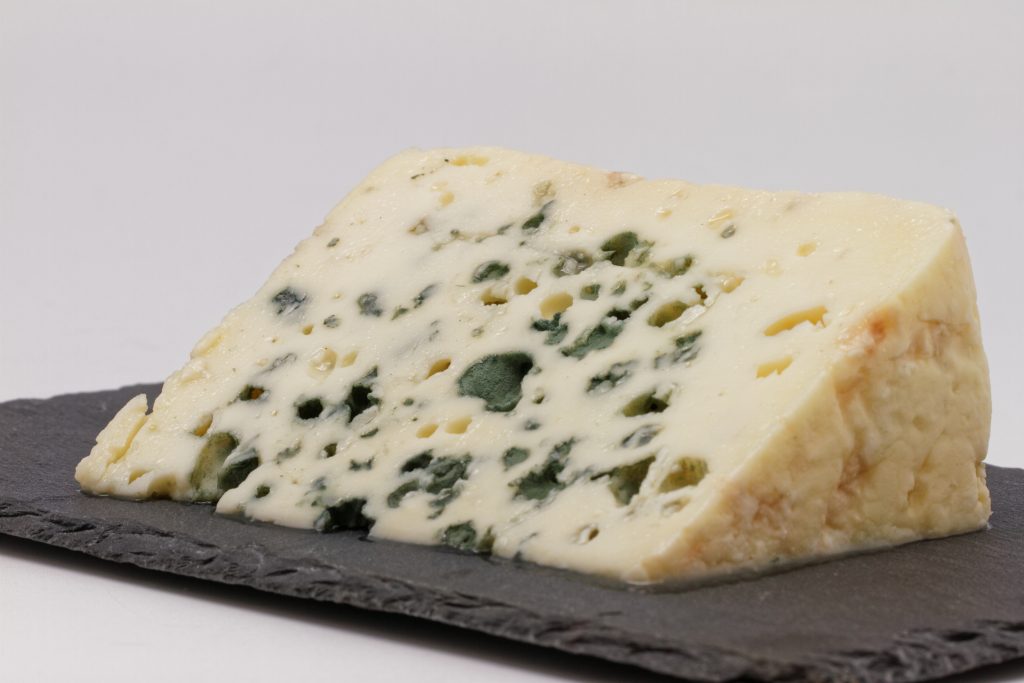
Woah woah woah. All this raving about invisible velociraptors and cheese, and all this time you’ve been stuffing your face with one of the smelliest cheeses known to man? This is proof! You don’t really believe that invisible velociraptors can smell cheese.
That’s liberal thinking.
He would say, how dare you presume to tell him his own opinons? The cheese in the fridge is beside the point. Why, only last week he fire-bombed a dairy! He doesn’t have to prove his belief in invisible velociraptors to you.
Imagine how his fellow velociraptorians would react to learning about the rocquefort. No, not like that. Imagine how they would really react.
What they care about is, would your bus-stop friend line up on the right side in a fight. To them, the worrying part of this story is him sharing a beer with you, an unbeliever. They would want him to react to your discovery by doubling down, by being aggressive, by behaving irrationally. When confronted by a choice between membership of the group and friendship with you, they want him to instinctively run to the former. And if he does so, they will instinctively defend him in turn. What they do not care about in the slightest, is how his fridge smells.
If you try to tell him that he doesn’t “really believe” what he’s saying, you’re attacking not just his identity but the whole of his real-life support system. You are claiming that he does not belong to the community without which he could not survive. With those as the stakes, he has no choice but to establish clearly that you are mistaken. At absolutely any cost.
In other words, confronting him about the cheese is a terrible idea.
True
Do Trump supporters really believe that Biden stole the 2020 election? Do they believe that abortion is the moral equivalent of murder? Do they believe that trans women are men in dresses? Sure, they absolutely believe those things. Would I expect them to behave the way you would if you believed those things? No, not at all. They still live in the same reality as the rest of us.
Does this knowledge help? I think it makes today’s political realities somewhat less confusing and frustrating. As to practical strategies for avoiding disaster, so far I haven’t used this framing to come up with any of those.