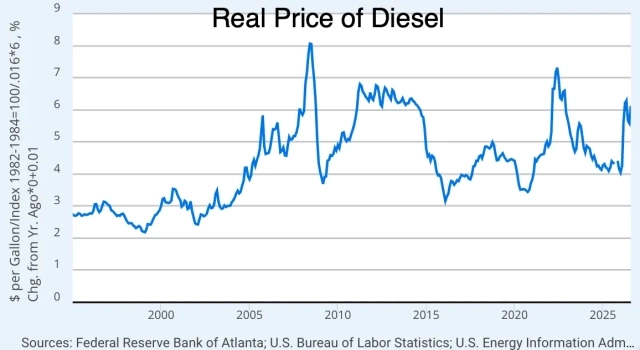
Solar power is now by far the cheapest source of electricity on earth. But at times like these, when we’re facing “unprecedented” energy bills, I wish the media would invest more effort pointing out a bigger benefit of solar power: stability.
Scenario 1
Suppose your town gets electricity from natural gas. One day, a Monday, there’s a war. The price of gas doubles. Let’s say your local power station has a big gasometer next to it, holding a month’s worth of gas. What happens to your electricity bill?
The answer is that your bill doubles on Tuesday. I guess you knew that.
On Tuesday, the power company is selling you natural gas it paid $15 for and charging you as if it cost $30. What’s up with that? Sounds like price-gouging to me! Doesn’t it seem fair that they should hold off price increases until they’ve used up the cheap gas? People like you and me, individuals struggling to get by, can’t absorb a short-term hit like that. Give us a month to prepare! The power company was planning to sell that gas at $15. They absolutely do not need the extra windfall profits.
Any economist will shake their head sadly and mutter something about price caps never working. Of course you don’t trust them, because they’re free market ideologues. Those are the neoliberals who reflexively reject any suggestion that the people might take democratic control of parts of the economy. Fuck those guys.
Unfortunately though, they’re right. Here’s what happens. The power company CEO, a big-hearted man of the people, decides he’ll just eat the price increases for the next few weeks. But the war isn’t ending any time soon. Everyone knows that the price will have to increase sooner rather than later. So, a bunch of entrepreneurially-minded people, people who happen to own a bunch of batteries, start charging up. They know that the power they store will be worth a fortune in a few weeks. The extra demand on the system causes brownouts. So congratulations, your power is even cheaper now, because you can’t get any. Meanwhile, the battery owners get free money.
Worse, this is super wasteful. If you charge a kilojoule into a battery, you get much less than a kilojoule out later. Better to sell that power to someone who can use it effectively now.
To prevent this happening, you need to ban “excessive” power use during crisis periods. But who gets to define “excessive”? You end up with some crazy intrusive system, inspecting everyone’s electrical equipment, requiring extra planning permission to install a battery in your garage. It has to be intrusive, because there are just so many ways to store power. Winching concrete lumps out of mine shafts, for example, is a surprisingly efficient power storage system. And it goes further. People can “store power” by smelting iron, or synthesising ammonia. In fact all of these things are useful, more-or-less. But with a price cap in place, they’ll be the reason your hospital loses power during your surgery.
Really there’s no good answer to this riddle. Probably the best thing you can do is nationalise your power company. Then the whole population shares in the windfall profits. If you’re particularly civilised, perhaps you could take the opportunity to redistribute some money to the people who can least afford the power bills. Other than that, you just let the price get bid to wherever it wants to go. Inevitably, no matter what government policies are in place, some people are going to be pushed over the edge by that shock. It’s wasteful and bad for everyone. But that’s true about anything you might try.
Scenario 2
Alright, question two. Suppose your town gets electricity from solar power. One day, a Monday, there’s a war. The price of solar panels doubles. What happens to your electricity bill?
The answer is, nothing at all. Not on Tuesday, not in a month, not in a year.
To keep a gas power plant running you need gas deliveries every month. No gas delivery, no power. But a solar power plant can keep going for decades without installing a single new panel. Sure, panels degrade or are damaged. It’s a good idea to do maintenance. But this can be delayed. Hopefully the war will end soon. If not, you have plenty of time to find alternative suppliers. The existing solar panels will pretty much keep you going for long enough that your country could even set up its own solar manufacturing industry!
People used to complain that solar panels don’t deliver power at night or on cloudy days. How can you build an economy around such an unreliable power source? Now we have batteries and panels efficient enough to deliver power on an overcast winter day. But look at fossil fuels. The price is all over the place, and always has been. How can we build our economy around such an unreliable power source as fossil fuels? It seems positively ridiculous.
Politics
It’s long been a depressing truism, especially about American politics, that elections are simply a reflection of the price of fuel. The current price spike is exceptional, in that it is clearly Trump’s fault. Usually American presidents have no control over prices at all. Certainly Biden got kicked out because of inflation, which was due to Covid 19, and the economic effects of that crisis were locked in before he got elected.
We’re in a world where Trump fumbles a response to one crisis, the effects hit his successor, and the population responds by re-electing the idiot who caused the problem in the first place. I believe the benefits of democracy are subtle. I don’t need to see populations making thoughtful considered decisions to believe democracy is the best system in the long term. But damn, watching that… is it really not possible to do better?
I don’t know if removing energy volatility would solve the toxicity of American politics. But we’ve seen fossil fuel volatility ruin politics over and over again. The damage to civil society is cumulative. This seems like something we can and should fix.
Power
The volatility of fossil fuels is more than just an unfortunate fact of life. To a very small group of people, it’s what makes them so great.
Fossil fuels flow through chokepoints. The people who control those chokepoints are immensely powerful. They can turn that control into inconceivable wealth.
By this point I guess we all understand that the real cause of “polarisation” in politics is the money petrostates are pouring into the toxic alliance between neoliberalism and fascism. The principle petrostates are Saudi Arabia, Russia, and the USA. The governments of those countries love fossil fuels because they love having the rest of the world clinging to their ankles begging for favours. China owns the market for solar panels, but no-one will ever press for a high-level summit to guarantee the supply of those panels. There’s no need.
The best interests of practically everyone in the world, including the populations of Saudi Arabia, Russia, and the USA, is for an immediate massive investment in the energy transition from fossil fuels to solar. But the tiny minority that would suffer from that change, happen to be the tiny minority that have monopolised the world’s wealth. And therefore, monopolised political power over the world.
Renewable energy used to be a good idea. Today, it’s beyond madness to use anything else. But we are stuck with a political system hell-bent on denying us access to a better future. It will be easy to complete the energy transition. But we need to discard the habit of seeking compromise, as we face down the disingenuous voices actively trying to prevent us acting in our own obvious best interest.